

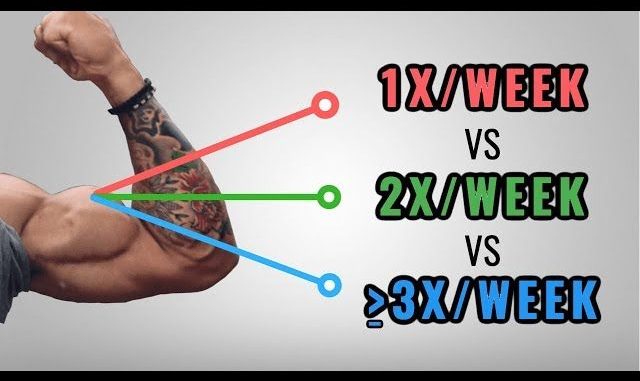
Building muscle is a goal that many individuals aspire to achieve, but one of the key factors in determining success is how often you train. Training frequency plays a crucial role in muscle growth, as it determines the amount of stimulus your muscles receive to adapt and grow.
Understanding Muscle Protein Synthesis
When you engage in resistance training, you create micro-tears in your muscle fibers. This process activates a mechanism known as muscle protein synthesis, which is essential for muscle repair and growth. The frequency of your training sessions directly impacts the rate of muscle protein synthesis, ultimately influencing your muscle-building progress.
Training Splits for Optimal Muscle Growth
When it comes to training frequency, the concept of training splits becomes important. A training split refers to how you distribute your workouts throughout the week. Common training splits include:
Full-body workouts: 3-4 times per week
Upper/lower body split: 4 times per week
Push/pull/legs split: 5-6 times per week
The key is to ensure that your training split allows for adequate recovery time between sessions while also providing enough stimulus for muscle growth.
Factors Influencing Training Frequency
Several factors can influence how often you should train to build muscle:
Your training experience: Beginners may benefit from more frequent training to adapt to the stimulus, while advanced lifters may require more recovery time between sessions.
Your genetics: Some individuals may respond better to higher training frequencies, while others may thrive on lower frequencies.
Your lifestyle: Consider your schedule, recovery abilities, and other obligations when determining your training frequency.
Monitoring Progress and Adjusting Frequency
It’s essential to monitor your progress regularly and adjust your training frequency as needed. If you find that you’re not making progress or experiencing fatigue, it may be time to reevaluate your training frequency. Gradually increasing or decreasing your training frequency can help optimize your muscle-building results.
Conclusion
When it comes to building muscle, training frequency is a crucial factor that can significantly impact your results. By understanding the importance of training splits, monitoring your progress, and adjusting your frequency as needed, you can optimize your muscle-building journey and achieve your goals efficiently.